

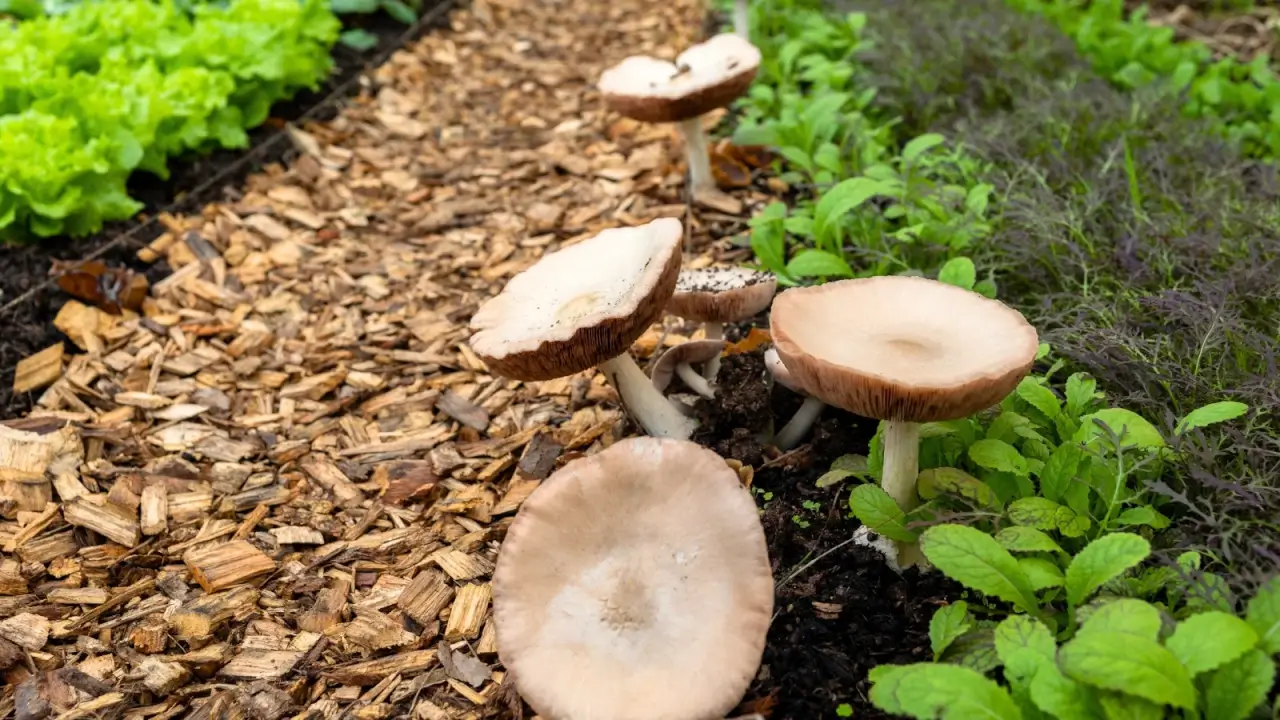
You know that feeling when you lift a shovelful of healthy garden soil? It’s dark, crumbly, and smells like rain and life. That smell, honestly, is partly the work of fungi. We gardeners spend so much time focused on seeds, sun, and water—and sure, those are vital—but we’re often blind to the silent, sprawling network working beneath our feet.
This underground world, the mycorrhizal network, is a game-changer. It’s a symbiotic partnership where fungal threads connect with plant roots. The plant shares sugars from photosynthesis; in return, the fungi act as a vast extension of the root system, fetching water and nutrients from far-off soil pockets. It’s a trade agreement millions of years old. And we can invite it into our home vegetable plots.
Your Garden’s Secret Internet: The Wood Wide Web
Think of the fungal mycelium—those thin, white, thread-like structures—as nature’s internet. Dubbed the “Wood Wide Web” by scientists, this network connects plants, allowing them to communicate and even share resources. A stressed tomato plant might receive a boost of nutrients from a robust zucchini nearby, all routed through the fungal web.
For the home gardener, tapping into this isn’t just sci-fi. It’s a practical strategy for building resilience. It means your plants can access more food and water with less effort, leading to stronger growth and, often, better yields. Especially in times of drought or nutrient stress.
Who Teams Up with Fungi? A Quick Guide
Not all plants are equally social in the fungal sense. Most form these partnerships, but some common garden favorites are real networkers, while a few… well, they’re the lone wolves.
| Heavy Networkers (Mycorrhizal Dependent) | Lone Wolves (Non-Mycorrhizal) |
| Tomatoes, Peppers, Eggplants | Brassicas (Kale, Broccoli, Cabbage) |
| Squash, Cucumbers, Melons | Spinach, Beets, Chard |
| Lettuce, Beans, Peas | Radishes, Mustard Greens |
| Most Herbs (Basil, Rosemary) | Amaranth |
Here’s the deal: you can still grow brassicas and beets wonderfully. Just know they won’t benefit from fungal inoculants in the same way. That said, in a diverse garden, their presence doesn’t harm the network. It just adds to the overall ecology.
Practical Steps to Cultivate Your Fungal Allies
So, how do you actually integrate mycology into home gardening? It’s less about adding a magic powder and more about shifting your soil stewardship. It’s a mindset.
1. Stop Tilling. Seriously.
The single most destructive thing you can do to a fungal network is rip it apart with a rototiller. Mycelium is a delicate, web-like structure. Tilling shreds it. Instead, adopt no-till or low-till practices. Add compost on top, let worms do the digging, and protect that subterranean architecture.
2. Inoculate with Intent
You can introduce beneficial fungi directly. Mycorrhizal inoculants, available as powders, granules, or gels, are packed with fungal spores. Apply them at planting time:
- For transplants: Dust the root ball or make a slurry and dip the roots.
- For seeds: Mix the inoculant into the soil of the planting hole or row.
- For established plants: Work it into the top few inches of soil around the root zone (though this is less effective than at planting).
3. Feed the Fungi (They Eat What You Eat)
Fungi need carbon to build their networks. They thrive on organic matter. Regular applications of well-finished compost, leaf mold, or wood chip mulches are like laying out a feast. Leaf mold, in particular, is a fungal-dominated paradise. Making it is simple—just pile leaves and wait.
4. Diversify Your Plantings
A monoculture supports a limited network. A polyculture—mixing vegetables, herbs, and flowers—creates a rich, complex community. The more plant diversity above ground, the more robust and interconnected the fungal network below. It’s that simple.
The Mycology Gardener’s Toolkit: What Really Works
Let’s get specific. Beyond inoculants, certain practices directly encourage a fungally-dominated soil, which is typically what perennial systems and forests have. We’re aiming for that in our annual beds.
- Wood Chips as Mulch: A game-changer. As they slowly break down, they favor fungal decomposers. Apply a thick layer on pathways or around perennial veggies like asparagus.
- Compost Tea (Aerated): When brewed with a fungal-friendly food source like kelp or fish hydrolysate, it can boost microbial life, including fungi.
- Avoid High-Phosphorus Fertilizers: This is key. Synthetic, high-phosphorus fertilizers (the middle number on a bag) can suppress mycorrhizal formation. The fungus isn’t needed if the plant gets a synthetic drink of P right at its roots.
- Keep the Soil Covered: Bare soil is stressed soil. Mulch protects the delicate surface mycelium from sun and erosion.
Seeing the Results: What to Expect
You won’t see neon signs. The changes are subtle but profound. You might notice your plants are more drought-tolerant—they just don’t wilt as fast. Seedlings establish quicker. Overall, there’s a vigor, a resilience against the odd stressful week of weather.
The soil itself changes. It becomes more aggregated—those lovely little crumbs that hold together but still allow air and water to flow. You’ll find more white, thread-like mycelium when you gently move aside mulch. That’s a sign of life.
In fact, the ultimate goal isn’t just to grow vegetables. It’s to grow soil. The vegetables are a fantastic byproduct of a healthy ecosystem. When you build fungal networks in vegetable gardens, you’re not just feeding yourself this season. You’re building capital for every season that follows.
A New Layer to an Ancient Practice
Integrating mycology isn’t about discarding everything you know. It’s about adding a new layer of understanding. It’s looking at that wilting seedling and thinking not just “it needs water,” but “how can I help its network support it?”
This approach connects your small plot to the oldest, most successful survival strategy on Earth: collaboration. It’s a shift from being a mere grower to being an ecosystem curator. The network is down there, waiting. All it needs is an invitation.


